
The Rise of Spatial Computing
Innovarte Team
Editorial
Beyond the Consumer Headset
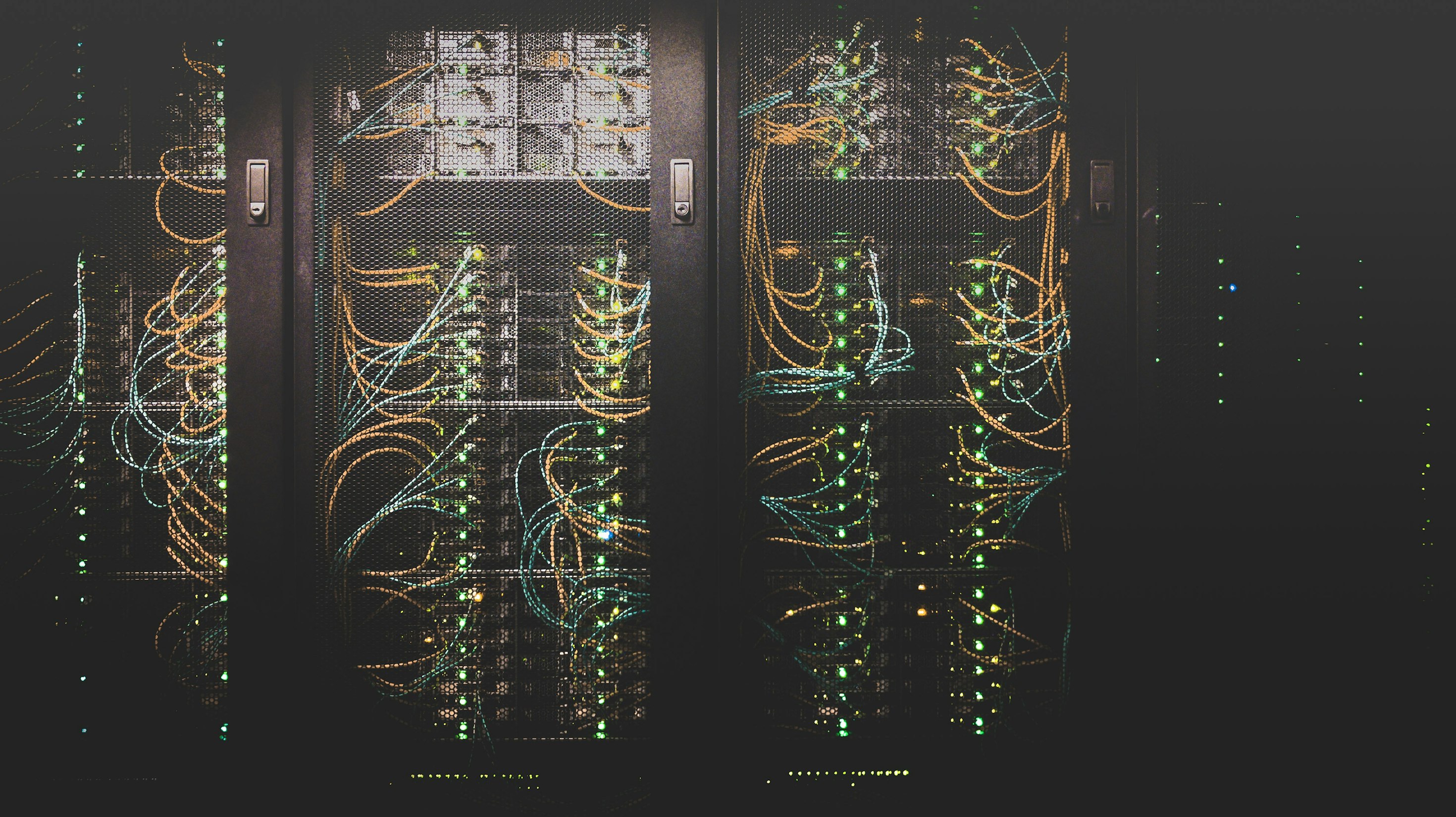
The cloud is an operating model, not just a location. Photo: Innovarte
When Apple announced the Vision Pro, the mainstream conversation focused on consumer entertainment—watching movies on a massive virtual screen or playing immersive games. However, in the enterprise sector, we view spatial computing not as a novelty, but as the next major paradigm shift in human-computer interaction. Spatial computing blends the digital and physical worlds, allowing users to interact with software in three-dimensional space.
For our clients in manufacturing, logistics, and healthcare, the limitations of two-dimensional screens are becoming apparent. When a technician is repairing a complex piece of industrial machinery, looking away to consult a tablet breaks their flow and introduces the potential for error. Spatial computing brings the data directly into their field of view, exactly when and where they need it.
Industrial Applications and Digital Twins

Technology is a tool, not a strategy. Photo: Innovarte
The most immediate enterprise ROI for spatial computing lies in training and complex assembly. We are working with industrial clients to develop augmented reality (AR) applications that overlay step-by-step instructions directly onto physical equipment. This drastically reduces training time for new employees and minimizes errors on the assembly line.
- Remote Assistance: A junior technician in a remote South African mining facility can wear an AR headset, allowing a senior engineer in Johannesburg to see exactly what they see and overlay annotations onto their physical environment in real-time.
- Interacting with Digital Twins: We integrate spatial computing interfaces with IoT data to create interactive digital twins. A facility manager can walk through a factory and see real-time temperature and vibration metrics hovering above the physical machines.
- Spatial Design: Architects and product designers can manipulate 3D CAD models in physical space, collaborating with remote teams as if they were in the same room, accelerating the prototyping phase.
These applications require robust backend infrastructure. Rendering high-fidelity 3D models and processing real-time spatial data demands significant compute power and ultra-low latency, which is why spatial computing is tightly coupled with the rollout of 5G and edge computing architectures.
The Development Ecosystem

Data drives decisions, but humans provide context. Photo: Innovarte
Building for spatial computing requires a fundamental shift in how we design user interfaces. We are no longer constrained by the edges of a screen; the user's entire environment is the canvas. This requires new design paradigms focused on gaze tracking, hand gestures, and spatial audio.
"Spatial computing forces us to stop designing interfaces that users look at, and start designing environments that users inhabit."
The development ecosystem is maturing rapidly. We utilize frameworks like Unity and Unreal Engine, alongside native SDKs like Apple's visionOS and Meta's Presence Platform, to build these immersive experiences. However, the integration with existing enterprise backends—pulling live data from an ERP or pushing maintenance records to a CRM—remains a complex integration challenge that requires deep architectural expertise.
Preparing for the Spatial Web

Security is a continuous process, not a destination. Photo: Innovarte
While widespread enterprise adoption of spatial computing is still in its early stages, the trajectory is clear. Just as the transition from desktop to mobile fundamentally changed how businesses operate, the transition to spatial computing will redefine the nature of work for millions of frontline and deskless workers. Organizations that begin experimenting with these technologies today will have a significant competitive advantage as the hardware becomes lighter, cheaper, and more ubiquitous.
Related Articles

Web3 and the Enterprise: Separating Signal from Noise
A pragmatic look at decentralized technologies and their actual utility for traditional business models.
Read more
The Ethics of Automated Decision Systems
Addressing bias, fairness, and accountability when deploying algorithms that impact human lives and livelihoods.
Read more