
The Future of Enterprise AI: Beyond the Hype
Innovarte Team
Editorial
Moving Past the Proof of Concept

Technology is a tool, not a strategy. Photo: Innovarte
We've all seen the impressive demos. A chatbot that writes code, a model that generates marketing copy in seconds, or an image generator that creates photorealistic scenes. But when we sit down with enterprise clients across Johannesburg and Cape Town, the conversation quickly shifts from "what's possible" to "how do we actually run this in production?" The reality is that deploying enterprise AI is fundamentally different from playing with consumer-grade APIs. It requires rigorous engineering, strict data governance, and a clear understanding of the business problem being solved.
Our teams have spent the last year moving beyond the hype, focusing on the unglamorous but critical work of operationalizing machine learning models. We've found that the biggest hurdle isn't the algorithm itself, but the infrastructure required to support it. When you're dealing with sensitive financial data or healthcare records, you can't simply pipe everything to a public cloud endpoint. You need robust, secure, and often localized solutions that comply with strict regulatory frameworks.
The transition from a Jupyter notebook to a highly available, fault-tolerant production system is where most AI initiatives fail. We see organizations struggle with model versioning, deployment pipelines, and monitoring for data drift. These are not data science problems; they are software engineering problems. Treating AI as a separate discipline rather than an extension of your core engineering practice is a recipe for technical debt and operational instability.
The Data Foundation: Garbage In, Liability Out

Data drives decisions, but humans provide context. Photo: Innovarte
Before you can even think about training a model, you need to get your data house in order. This is where many organizations stumble. They have petabytes of data, but it's siloed across legacy mainframes, unstructured in object storage, and often of poor quality. We advocate for a strong data engineering foundation as the absolute prerequisite for any AI initiative.
- Data Lineage and Provenance: Knowing exactly where your data comes from, who owns it, and how it's been transformed across its lifecycle.
- Automated Quality Controls: Implementing rigorous checks to ensure data integrity before it ever reaches a training pipeline or inference endpoint.
- Strict Governance and Compliance: Enforcing granular access controls and comprehensive auditing, which is especially critical when navigating POPIA regulations in South Africa.
Without these elements, your AI models will simply amplify existing data issues at scale, leading to flawed insights and potentially disastrous business decisions. We've seen companies deploy models that inadvertently exposed PII because their data pipelines lacked basic sanitization checks. The cost of remediating these issues far outweighs the initial investment in proper data governance.
Architecting for Scale, Security, and Sovereignty

Security is a continuous process, not a destination. Photo: Innovarte
When we architect AI systems for our enterprise clients, we prioritize security and scalability from day one. This often means leveraging the AWS Cape Town region to ensure data sovereignty and minimize latency for local users. We design systems that can handle bursty inference workloads without breaking the bank, utilizing serverless compute where appropriate and reserved instances for steady-state processing.
"The true test of an AI system isn't its accuracy on a pristine training set, but its resilience in the face of real-world, messy data and unpredictable user behavior."
Security is another major concern that cannot be bolted on as an afterthought. We implement strict network isolation using VPC endpoints, encrypt data at rest using customer-managed KMS keys, and utilize IAM roles with the principle of least privilege. We also build in robust monitoring and alerting to detect anomalies in model behavior, which could indicate data drift, adversarial attacks, or a potential security breach.
Furthermore, we have to consider the unique constraints of our operating environment. Building resilient systems in South Africa means accounting for infrastructure instability, including load-shedding. Our architectures must be fault-tolerant, with aggressive caching strategies and asynchronous processing queues to ensure that temporary network partitions or power events don't result in data loss or catastrophic system failure.
The Human Element: Augmentation, Not Replacement

Innovation requires a solid foundation. Photo: Innovarte
Finally, we must address the human element. The narrative that AI will wholesale replace human workers is largely a distraction from the immediate reality. AI is an augmentation tool. We work closely with our clients to ensure their teams are trained to use these new systems effectively. This involves not just technical training for engineers, but also change management and a clear communication strategy for the broader organization.
We need to build interfaces that allow human operators to understand why a model made a specific decision, providing mechanisms for override and feedback. This "human-in-the-loop" approach is essential for building trust in automated systems, particularly in high-stakes environments like financial services or healthcare.
The future of enterprise AI is about empowering people to do their jobs better, faster, and with greater insight. By focusing on the engineering fundamentals, prioritizing security and governance, and investing in our people, we can unlock the true potential of this transformative technology and build systems that deliver lasting value.
Related Articles

Web3 and the Enterprise: Separating Signal from Noise
A pragmatic look at decentralized technologies and their actual utility for traditional business models.
Read more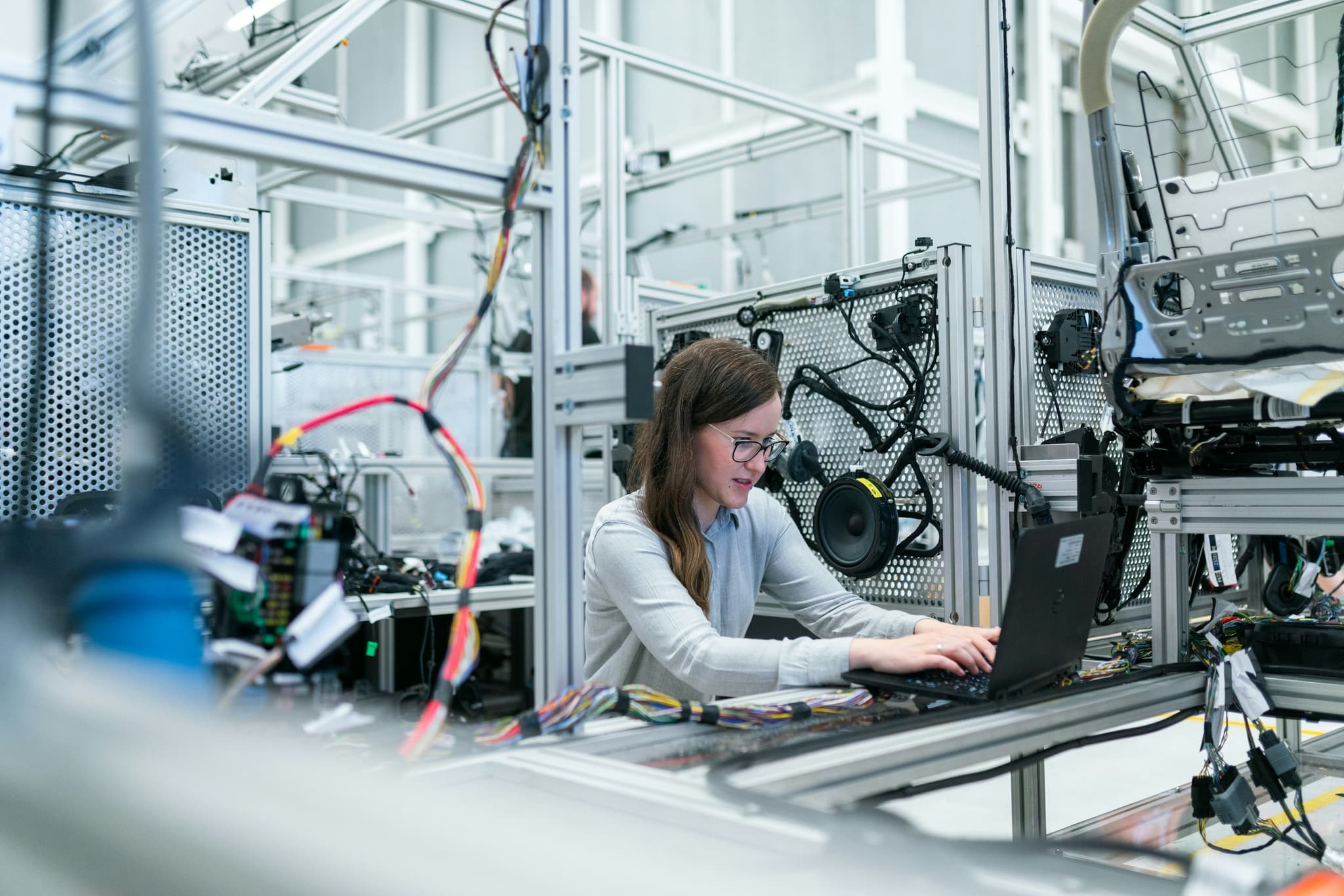
The Ethics of Automated Decision Systems
Addressing bias, fairness, and accountability when deploying algorithms that impact human lives and livelihoods.
Read more